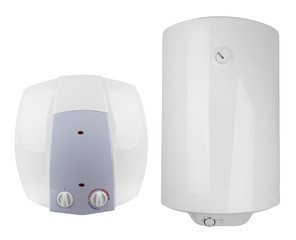
The tankless hot water heater is compact in size and essentially gets rid of standby losses. They can provide warm water at remote points of use and less water is wasted while awaiting warm water to reach a remote faucet. These kinds of systems also have unique venting requirements and should only be vented with a committed, sealed vent system. All makers recommend a particular brand of the stainless-steel vent pipeline. On-demand water heaters (called demand-type or immediate) heat water as required, and due to their compact size, are typically situated near the point of use. The absence of a storage tank and shorter circulation lines significantly decreased standby losses and increased effectiveness. A tankless water heater is not instantaneous. It does take them about 2 seconds to go from there at rest "off" mode to producing warm water at the setpoint temperature. Tankless water heaters may be mounted on walls, and are perfect for manufactured homes where space might be limited.
The tankless water heater saves energy by removing standby losses associated with conventional, tank-style heaters. Even with outstanding insulation around the tank, energy is undoubtedly lost to the surrounding air throughout time, even when you don't use any hot water. Tankless heaters are sized with a circulation rate as determined in gallons per minute (GPM). Generally, a bathtub requires 4 GPM, showers 2.5 GPM, cleaning machines 3 GPM, dishwasher 3 GPM, and each sink 2 GPM. The tankless hot water heater has several benefits over standard water heating units. The biggest benefit is the cost of running these systems.
The tankless water heater has strict venting codes and is finest installed by a professional H.V.A.C. business with accredited technicians. Most of these units require direct (through the wall) venting with clearance regulations. Tankless water heaters bypass the tank and path heated water straight to taps or home appliances rather. A lot of hot water heater are sustained by natural gas, although propane and electric water heaters are not unusual. The tankless hot water heater heats up the water immediately when you turn on the faucet, instead of keeping a tank loaded with hot water 24/7 whether you're using it or not. Tankless heaters operate on either electricity or gas, much like routine heaters, and all the different models are ranked on how many gallons are provided per minute.
An electric tankless water heater, about the size of a medication cabinet, can be wall-mounted indoors or perhaps outdoors. Experience: The tankless water heater never ever runs out of hot water. A tankless water heater is ranked by the maximum temperature increase possible at an offered circulation rate. To make sure that your system delivers enough warm water, identify the flow rate and temperature increase you'll need.
Tankless hot water heater systems are extremely nice and can be of extreme help when it concerns the water heating in your home. One need to comprehend that there are many various models of tankless water heater systems available on the market. Tankless is fine under your condition. Bear in mind that you can have the temperature level at a low volume however if you go beyond that volume (2 showers at the same time, and so on) the temperature level will decrease. Tankless systems are small-very small-compared to traditional hot water heater. As a result, they can be installed practically anywhere, and it's easy to use multiple tankless units to divide your domestic warm water supply into 2 zones.
Tanks do not have the ability to accurately control water temperature or energy usage. The included tankless benefit is optimal energy performance. Tankless does not work the like a traditional tank and you need to change. I will do either the solar pre-heat or HP pre-heat so she can turn on a tap, wash her hair, rinse a glass, meals, and so on
.